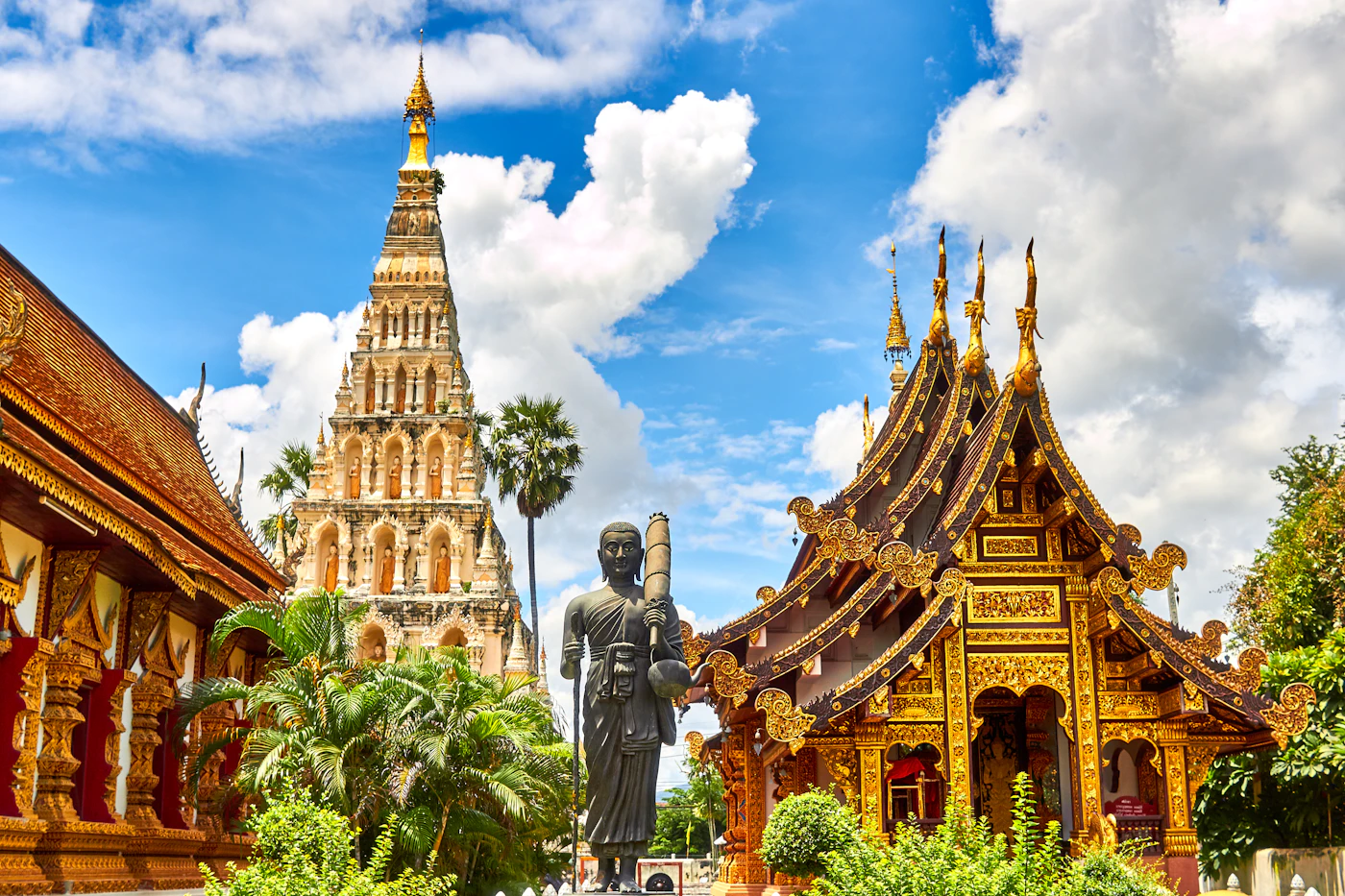
Thailand occupies a singular position in the global travel landscape. It is simultaneously one of the most visited countries on Earth and one of the most rewarding, a place where mass tourism has not managed to erode the fundamental generosity and warmth that defines Thai culture. The numbers are staggering - over 35 million international visitors arrived in 2025, making it the most visited country in Southeast Asia by a wide margin - yet the experience of sitting in a family-run restaurant on a quiet Bangkok soi, eating pad kra pao that costs less than two dollars and tastes better than anything you have eaten in your life, feels as intimate and authentic as it did thirty years ago. This is Thailand's trick: the infrastructure of a mature tourism destination layered over a culture so deep, so varied, and so fundamentally hospitable that the surface barely scratches it.
What makes Thailand work for virtually every type of traveler is its range. Backpackers have been coming here since the 1970s, when the Banana Pancake Trail first linked Bangkok's Khao San Road to the beaches of the south and the hill tribes of the north. Luxury travelers have more options than ever, with world-class resorts on islands like Koh Samui and Phuket, and Bangkok hotel bars that rival anything in Singapore or Hong Kong. Families find the country safe, navigable, and endlessly entertaining. Digital nomads have built entire communities in Chiang Mai and on the islands. Food obsessives consider Thailand one of the essential culinary destinations on the planet. And all of them are right, because Thailand is big enough, diverse enough, and affordable enough to be all of these things simultaneously without any of them feeling like a compromise.
Best Regions to Visit
Bangkok - The Capital of Everything
Bangkok is one of those cities that resists summary. It is ancient and ultramodern, spiritual and hedonistic, serene and cacophonous - often within the same block. The Grand Palace and the Temple of the Emerald Buddha (Wat Phra Kaew) remain the essential starting point, a complex of such extravagant detail and shimmering gold that first-time visitors frequently stand at the entrance unable to process what they are seeing. Wat Pho, next door, houses the 46-meter Reclining Buddha and is also the birthplace of traditional Thai massage - you can get a legitimate, bone-cracking, two-hour massage here for $12. Across the river, Wat Arun (the Temple of Dawn) is encrusted with thousands of pieces of Chinese porcelain that catch the light at sunset in a way that makes the entire structure seem to glow from within.
But the temples are just the frame. The real Bangkok reveals itself in layers. Chinatown (Yaowarat) comes alive after dark when the street food stalls fire up and the neon signs illuminate a stretch of road that has been the center of Thai-Chinese commerce for over two centuries - grilled seafood, bird's nest soup, crispy pork belly, and mango sticky rice served from carts that have occupied the same spots for generations. The old neighborhoods of Banglamphu and Phra Nakhon are being reimagined as creative districts, with century-old shophouses converted into galleries, specialty coffee roasters, and cocktail bars that would be at home in Brooklyn or Shoreditch. Chatuchak Weekend Market sprawls across 35 acres with over 15,000 stalls selling everything from vintage clothing to fighting fish to handmade furniture - it is the largest outdoor market in the world and one of those places where you go for an hour and emerge four hours later carrying things you did not know you wanted. The Skytrain (BTS) and Metro (MRT) make the city navigable despite its legendary traffic. Budget travelers can live well in Bangkok on $25-40/day; mid-range travelers spending $80-150/day will eat magnificently and sleep in boutique hotels; and luxury travelers will find five-star options at prices that would buy a mid-range room in most Western capitals.
Chiang Mai and the North - Mountains, Temples, and Hill Tribes
Chiang Mai, the Rose of the North, is Thailand's cultural counterweight to Bangkok - quieter, cooler (both in temperature and in temperament), surrounded by forested mountains, and home to more than 300 Buddhist temples within its ancient walled city. The old city is a square moat enclosing a grid of streets where temples appear around every corner, each one different: Wat Chedi Luang with its partially ruined 14th-century chedi, Wat Phra Singh with its exquisite Lanna-style architecture, Wat Chiang Man - the city's oldest temple, founded in 1296 when King Mengrai established Chiang Mai as the capital of the Lanna Kingdom. The Sunday Walking Street market transforms the Tha Pae Gate area into a kilometer-long open-air bazaar of handicrafts, hill tribe textiles, wood carvings, and street food every weekend evening.
The real draw of the north, though, is what lies beyond the city. Doi Inthanon National Park, centered on Thailand's highest peak at 2,565 meters, offers cool-climate hiking through cloud forests and past dramatic waterfalls, with Hmong and Karen hill tribe villages along the trails. The Elephant Nature Park, founded by the remarkable Lek Chailert, has become the gold standard for ethical elephant tourism - rescued elephants roam freely across a river valley, and visitors observe them bathing, socializing, and eating rather than riding them or watching them perform. This is the model that has reshaped elephant tourism across Thailand, and visiting it is one of the most moving wildlife experiences in Southeast Asia. Chiang Rai, three hours north, offers the surreal White Temple (Wat Rong Khun) - a contemporary Buddhist temple rendered in dazzling white with mirror glass embedded in the plaster - and the Blue Temple (Wat Rong Suea Ten), and serves as the gateway to the Golden Triangle where Thailand, Laos, and Myanmar meet at the Mekong River. Pai, a small town in a mountain valley northwest of Chiang Mai, has evolved from a backpacker secret into a bohemian retreat with hot springs, waterfalls, canyon viewpoints, and a main street lined with live music bars, vegan cafes, and handcraft shops. Budget $20-35/day, mid-range $50-120/day.
The Andaman Coast - Krabi, Phi Phi, and Phuket
Thailand's Andaman coast, facing the Indian Ocean on the country's western shore, contains some of the most visually dramatic coastal scenery in the world. The limestone karst formations that rise vertically from emerald-green water around Krabi, Railay, and Phang Nga Bay look like they were designed by a particularly ambitious fantasy illustrator - sheer rock walls hundreds of meters high, draped in jungle, riddled with caves, surrounded by water so clear you can see fish from the surface. Railay Beach, accessible only by longtail boat despite being on the mainland (cliffs block all road access), is the epicenter: a small peninsula with four beaches, world-class rock climbing on the karst walls (over 700 bolted routes ranging from beginner to expert), and a vibe that balances development with genuine beauty. Tonsai Beach, a short walk from Railay, is the climbers' camp - cheaper, rougher, and with a communal atmosphere built around shared passion for the rock.
Phuket, Thailand's largest island, has earned a complicated reputation. The west coast - particularly Patong Beach - is heavily developed, loud, and oriented toward package tourism and nightlife. But the island is larger and more varied than Patong suggests. The east coast is quieter, with mangrove-lined bays and traditional fishing villages. Phuket Old Town is a charming grid of Sino-Portuguese shophouses painted in pastels, now filled with cafes, galleries, and boutique hotels. Kata and Karon beaches on the southwest coast offer good surf in the monsoon season (May through October) and are family-friendly alternatives to Patong. And Phuket serves as the departure point for the Similan Islands, a marine national park 60 kilometers offshore where the diving is world-class - granite boulders create swim-throughs and caverns, manta rays cruise the cleaning stations, and whale sharks pass through between February and April. The Phi Phi Islands, 90 minutes by speedboat from Phuket or Krabi, are the stuff of postcards: steep green islands surrounded by impossibly blue water, with Maya Bay (made famous by the film The Beach) now reopened with strict visitor caps that have allowed the coral and marine life to recover dramatically. Budget $30-50/day, mid-range $80-200/day, luxury resorts $300-800+/night.
The Gulf Islands - Koh Samui, Koh Phangan, and Koh Tao
The three main Gulf islands off Thailand's east coast form a natural progression from developed to wild. Koh Samui is the most established, with an international airport, luxury resorts, excellent restaurants, and ring-road infrastructure that makes it easy to explore. Chaweng Beach is the commercial center - busy, with good nightlife - while Bophut's Fisherman's Village offers a quieter alternative with boutique hotels and beachfront dining. The Big Buddha temple at the island's northeast tip and the quirky Grandmother and Grandfather Rocks at Lamai are the main sightseeing draws, but Samui's real appeal is as a comfortable, well-serviced tropical base with enough variety to fill a week without ever feeling like you are roughing it.
Koh Phangan, a 30-minute ferry from Samui, is best known for the Full Moon Party at Haad Rin - a monthly beach rave that draws 10,000-30,000 people for a night of dancing on the sand with fire spinners, DJs, and neon body paint under the moonlight. Love it or avoid it depending on your tolerance for controlled chaos, but know that Koh Phangan is far more than one party. The northern and eastern coasts are genuinely tranquil, with beaches like Bottle Beach and Thong Nai Pan accessible only by boat or rough dirt road, yoga and wellness retreats in the hills above the coast (The Sanctuary and Orion are two of the most established), and a laid-back island culture that rewards slow travel. Koh Tao, the smallest of the three, is the diving island. It is one of the cheapest places in the world to get PADI certified - Open Water courses run $250-350 including accommodation, roughly half what you would pay in most other countries - and the dive sites around the island offer good visibility, coral gardens, reef sharks, and seasonal whale shark sightings. Even non-divers find Koh Tao rewarding: the snorkeling at Japanese Garden and Shark Bay is excellent, the viewpoints are dramatic, and the island's small size means you can walk or scooter everywhere. Budget $25-45/day, mid-range $70-180/day.
Isaan - The Real Thailand
Isaan, the vast northeastern plateau that makes up roughly a third of Thailand's land area, is the region that most tourists miss entirely - and the region that Thais themselves consider the heartland of their culture. This is where most of Thailand's rice is grown, where the food is spiciest, where the music (mor lam and luk thung) is most distinctive, and where traditional Thai rural life continues largely unchanged by tourism. The Khmer ruins at Phimai and Phanom Rung rival anything in Cambodia for architectural ambition - Phanom Rung, in particular, is a 10th-century Hindu temple complex perched on an extinct volcano with a processional avenue, naga bridges, and carved lintels of extraordinary quality, and you might be the only visitor there on a weekday morning. Nong Khai, on the Mekong River border with Laos, is home to the wonderfully bizarre Sala Kaew Ku sculpture park - a concrete garden of enormous Buddhist and Hindu statues created by a visionary mystic over several decades. The night markets in Isaan towns serve food that represents Thai cuisine at its most uncompromising: som tam (papaya salad) pounded to your preferred spice level in a mortar, larb (minced meat salad with herbs and roasted rice powder), grilled chicken from roadside vendors, sticky rice eaten by hand, and insects - crickets, silkworms, water bugs - fried and seasoned as casual snacks. Budget travelers can live like royalty in Isaan on $15-25/day.
Must-Do Experiences
Eat Your Way Through Bangkok's Street Food
Bangkok's street food scene is not a tourist attraction layered on top of the city - it is the city. An estimated 300,000 street food vendors operate across the capital, and Thais at every income level eat from them daily. The best approach is to forget restaurants entirely for your first few days and eat exclusively from carts and stalls. Start at Jay Fai, the only street food stall in the world with a Michelin star, where a 70-something woman in ski goggles cooks crab omelets and drunken noodles over roaring charcoal flames (expect to queue for 2-3 hours or arrive before opening). Then calibrate with Yaowarat Road in Chinatown at night: grilled river prawns the size of your forearm, tom yum with fresh shrimp, rolled ice cream, roasted chestnuts. Soi Charoen Krung 49 (Talat Noi neighborhood) has a cluster of vendors doing exceptional boat noodles - small, intensely flavored bowls of pork or beef noodle soup that cost $0.50-1 each, designed to be eaten three or four at a sitting. Wang Lang Market near Siriraj Hospital is a locals' favorite with stalls serving kanom jeen (rice noodles with curry), moo ping (grilled pork skewers), and fresh coconut ice cream. A full day of street food eating in Bangkok, covering three meals and multiple snacks, will cost $8-15 and produce some of the best meals of your life.
Dive or Snorkel the Similan Islands
The Similan Islands National Park, open only from October to May, is Thailand's premier diving destination and one of the best in the Indian Ocean. Nine granite islands surrounded by coral reefs, the Similans offer visibility regularly exceeding 30 meters, underwater boulder formations that create dramatic swim-throughs and caverns, and a density of marine life that reflects decades of strict protection. Richelieu Rock, a submerged pinnacle north of the main island group, is consistently rated among the top ten dive sites in the world - it is where you go to see whale sharks, manta rays, and clouds of barracuda and jacks. Liveaboard trips (typically 2-4 nights, $400-1,200 depending on duration and boat quality) are the best way to experience the Similans, as they allow you to dive the best sites at optimal times and reach areas that day-trip boats cannot. Day trips from Khao Lak ($80-120) offer snorkeling and introductory dives for those who want a taste without the commitment.
Visit an Ethical Elephant Sanctuary
Thailand's relationship with elephants is complex and evolving. For decades, elephant camps offering rides, tricks, and photo opportunities were a tourism staple, and the animal welfare issues were severe. The shift toward ethical sanctuaries - where elephants rescued from logging, trekking, and entertainment industries are rehabilitated and live in semi-wild conditions - represents one of the most significant changes in Thai tourism over the past decade. Elephant Nature Park in Chiang Mai is the pioneer and remains the gold standard: founded in the 1990s by Sangduen "Lek" Chailert, it now cares for over 80 rescued elephants on a 250-acre riverside valley. Day visits ($60-80) involve observing elephants, preparing their food, and watching them bathe in the river - but never riding or touching without the animal initiating contact. Similar ethical operations have sprung up across the country, including Elephant Jungle Sanctuary (multiple locations) and Burm and Emily's Elephant Sanctuary in Kanchanaburi. The key markers of an ethical sanctuary: no riding, no chains, no performances, no forced interaction, and transparency about each elephant's rescue story.
Explore Ancient Ruins at Ayutthaya and Sukhothai
Before Bangkok became the capital in 1782, two earlier kingdoms left behind archaeological complexes that stand among Southeast Asia's most impressive historical sites. Ayutthaya, just 80 kilometers north of Bangkok (reachable by train in under two hours), was the capital of the Kingdom of Siam from 1350 to 1767, when Burmese invaders burned it to the ground. What remains is a UNESCO World Heritage site spread across an island at the confluence of three rivers: headless Buddha statues, towering prang (Khmer-style towers), crumbling monasteries, and one famous Buddha head entwined in the roots of a banyan tree at Wat Mahathat. Rent a bicycle ($2-3/day) and spend a full day exploring the ruins, which are atmospheric and uncrowded compared to equivalent sites in other countries.
Sukhothai, 450 kilometers north, is older and arguably more beautiful. The capital of the first Thai kingdom (1238-1438), its historical park contains 193 ruins spread across 70 square kilometers of landscaped grounds, with the central zone - a walled enclosure of temples, Buddha images, and lotus ponds - accessible by bicycle or walking. The seated Buddha at Wat Si Chum, visible through a narrow slit in the walls of its enclosing mondop, is one of the most powerful images in Thai art. Visiting at sunrise, when the lotus ponds reflect the temple spires and the only sound is birdsong, is an experience that connects you to the deep history of Thai civilization in a way that no museum can replicate. Combined entry to the central, northern, and western zones costs $12.
Take a Cooking Class
Thai cooking classes have become one of the country's most popular tourist activities, and for good reason - Thai cuisine is both deeply rewarding to cook and notoriously difficult to replicate at home without understanding the fundamental balance of flavors (salty, sweet, sour, spicy, and umami) that defines every dish. The best classes start at a local market, where your instructor walks you through the ingredients: varieties of chili, types of basil (Thai sweet basil, holy basil, lemon basil - each used in different dishes), galangal versus ginger, palm sugar versus cane sugar, and the fish sauce hierarchy. You then cook three to five dishes over a half-day session, eating everything you make. In Chiang Mai, Asia Scenic Cooking School and Thai Farm Cooking School are long-established favorites - Thai Farm takes you to an organic farm outside the city to pick your own ingredients. In Bangkok, Silom Thai Cooking School and Baipai Thai Cooking School offer classes that work within a city-trip schedule. Expect to pay $30-50 for a half-day class, $50-80 for a full day including market tour.
Tell us your dates and interests - we'll find the best flights and hotels for your Thailand adventure at the lowest prices.
Plan My Thailand TripFood and Drink
Essential Thai Dishes
Thai cuisine is one of the world's great culinary traditions, and eating in Thailand - particularly from street vendors and small restaurants rather than tourist-oriented places - is consistently one of the highlights of any visit. Pad thai, the stir-fried rice noodle dish that most Westerners know as their introduction to Thai food, is actually a mid-20th-century invention, promoted by the government as a national dish during a period of nation-building. It is delicious when done well (look for wok hei - the smoky char from a screaming-hot wok) but represents a tiny fraction of what Thai cuisine offers. Tom yum goong (hot and sour shrimp soup) is the dish that best illustrates the Thai flavor philosophy: lemongrass, galangal, kaffir lime leaves, fish sauce, lime juice, and bird's eye chilies create a broth that hits every taste receptor simultaneously. Som tam (green papaya salad) is pounded to order in a mortar and pestle and is available in dozens of regional variations, from the relatively mild Bangkok version to the Isaan style with fermented fish paste and pickled crab that will test even experienced chili eaters. Khao soi, a northern Thai curry noodle soup topped with crispy fried noodles, is Chiang Mai's signature dish and one of the most satisfying things you will eat anywhere.
Regional Variations
Thai food varies dramatically by region, and understanding these differences enriches every meal. Central Thai cuisine (including Bangkok) tends toward sweeter, milder flavors with coconut milk-based curries - green curry (gaeng khiao wan), massaman curry, and panang curry are all central Thai dishes. Southern Thai food is the spiciest in the country, heavy on turmeric, yellow curry paste, and fresh seafood - gaeng som (sour orange curry with fish) and khua kling (dry-fried curry paste with minced meat) are southern staples that rarely appear on tourist menus but are worth seeking out. Northern Thai food is influenced by Burmese and Lao cuisine: sai oua (herb-stuffed pork sausage), gaeng hang lay (Burmese-style pork belly curry), and nam prik (chili paste dips served with steamed vegetables and sticky rice) are characteristic. Isaan food, as mentioned, is the spiciest and most assertive: larb, som tam, gai yang (grilled chicken), and sticky rice form the core of a cuisine that reflects the region's Lao cultural connections.
Drinks
Thai iced tea (cha yen) - a bright orange concoction of strongly brewed Ceylon tea, condensed milk, and sugar poured over ice - is absurdly sweet, absurdly delicious, and available from every 7-Eleven and street vendor for $0.50-1. Thai iced coffee follows the same principle with robusta coffee. Fresh fruit shakes are ubiquitous: mango, passion fruit, watermelon, pineapple, and dragon fruit blended with ice for $1-2. Chang and Singha are the national beers - both are decent, drinkable lagers best consumed ice-cold on a hot day (Thais often add ice to their beer, which is entirely reasonable in 35-degree heat). Leo is the slightly cheaper alternative. The craft beer scene is growing despite prohibitive taxes and regulations, with brands like Devanam and Chit Beer producing excellent small-batch ales available in Bangkok bars. Thai whiskey (actually rum, typically made from sugar cane) - Sang Som, Mekhong, and Hong Thong - is the budget drinking option, typically mixed with soda and lime at prices that make Western alcohol costs seem absurd.
Getting There and Around
Flights
Suvarnabhumi Airport (BKK) in Bangkok is one of the busiest airports in Asia and receives direct flights from virtually everywhere - all major European, North American, Middle Eastern, Australian, and Asian hubs have nonstop or one-stop connections. Don Mueang Airport (DMK), Bangkok's older airport, handles most domestic and budget airline flights (AirAsia, Nok Air, Thai Lion Air). Phuket (HKT) and Chiang Mai (CNX) also receive international flights from regional hubs. Round-trip flights from the US typically cost $500-900, from Europe $400-700, and from Australia $300-600. Domestic flights on AirAsia, Nok Air, and Thai Smile connect Bangkok to every major destination for $25-80 one way if booked in advance - flying from Bangkok to Chiang Mai takes one hour versus twelve by bus, and can cost less than the bus ticket if you book early enough.
Getting Around
Thailand's domestic transport network is extensive and affordable. Trains run by the State Railway of Thailand connect Bangkok to Chiang Mai (12-14 hours, with comfortable sleeper berths at $20-40), the northeast (Isaan), and the south (Surat Thani for island connections, Hat Yai near the Malaysian border). The overnight sleeper train to Chiang Mai is a classic Thai travel experience - the attendant converts your seat into a bunk at nightfall, you fall asleep to the rhythm of the tracks, and wake up in the mountains. Long-distance buses are frequent and cheap ($8-20 for most routes), with VIP classes offering reclining seats, blankets, and onboard snacks. Minivans connect smaller towns and are faster but more harrowing - Thai minivan driving is not for the nervous. Within cities, the tuk-tuk remains iconic but is primarily a tourist experience in Bangkok (Grab, Thailand's equivalent of Uber, is cheaper and air-conditioned). Songthaews (converted pickup trucks with bench seats) serve as shared taxis in smaller cities. Motorbike rental ($5-10/day) is the default transport on the islands and in the north, but be aware that accidents are extremely common and many travel insurance policies exclude motorbike injuries - check your policy carefully. Ferries connect the mainland to the Gulf and Andaman islands, with Lomprayah and Seatran operating the most reliable high-speed catamaran services.
Best Time to Visit
Thailand's climate divides into three seasons: hot (March-May), rainy (June-October), and cool (November-February). The cool season is peak tourism for good reason - temperatures are comfortable (25-32 degrees in most areas), rain is minimal, and the skies are clear. December through February is the busiest period, with Christmas and New Year commanding premium prices. The shoulder months of November and March offer nearly identical weather with smaller crowds. The hot season (March-May) can be brutally humid, particularly in Bangkok, though the islands remain manageable with sea breezes. Songkran (Thai New Year) in mid-April transforms the entire country into a water fight - the world's largest - and is worth experiencing at least once despite the heat. The rainy season brings afternoon downpours that are typically intense but short-lived, followed by sunny breaks. Prices drop 30-50 percent, tourist sites are uncrowded, and the landscape is at its greenest. The Andaman coast is the exception: heavy rain and rough seas close many islands and dive sites from May through October, while the Gulf coast islands (Samui, Phangan, Tao) have their own weather pattern with the wettest months being October and November.
Practical Tips
Money and Budget
The Thai baht (THB) is the currency. At current exchange rates, roughly 35 THB equals 1 USD. ATMs are everywhere and dispense cash readily, though most charge a 200 THB ($5.70) fee per withdrawal - minimize this by withdrawing larger amounts less frequently. Credit cards are accepted at hotels, shopping malls, and upscale restaurants, but cash is king for markets, street food, smaller shops, and transport. Thailand remains one of the world's great budget destinations: backpackers can travel comfortably on $25-40/day (dorm beds, street food, public transport, occasional activities), mid-range travelers on $60-150/day (private rooms, restaurant meals, domestic flights, daily activities), and luxury travelers will find exceptional value at $200-400/day compared to equivalent experiences in Europe or North America. Tipping is not traditionally part of Thai culture, but rounding up bills or leaving 20-50 THB at restaurants is increasingly common in tourist areas. Taxi drivers do not expect tips; massage therapists typically receive 50-100 THB.
Safety
Thailand is generally very safe for travelers, with violent crime against tourists being exceptionally rare. The primary risks are petty theft (watch your bags in crowded areas, use hotel safes), scams (gem scams in Bangkok are legendary - any stranger who approaches you to suggest a great deal on sapphires is running a con), and transport accidents. Motorbike accidents are the single biggest cause of tourist injury and death in Thailand - always wear a helmet, never ride after drinking, and be extremely cautious in rain. Rip currents are dangerous on west-facing beaches during monsoon season, particularly on Phuket and Koh Lanta. Food hygiene is generally excellent at busy street food stalls (high turnover means fresh ingredients), but exercise caution with ice, raw seafood, and stalls that appear to have low customer traffic.
Culture and Etiquette
Thai culture places enormous importance on respect, face-saving, and social harmony. The monarchy is deeply revered, and lese-majeste laws are strict - never make disparaging comments about the king or royal family, and stand when the royal anthem plays (before movies in cinemas, at 8 AM and 6 PM in parks and public spaces). Buddhist temples require modest dress: cover shoulders and knees, remove shoes before entering buildings, and never point your feet at Buddha images (sitting with legs tucked to the side is the correct posture). The head is considered the most sacred part of the body and the feet the lowest - never touch someone's head or point your feet at a person. The traditional Thai greeting is the wai - a prayer-like gesture with palms together at chest level accompanied by a slight bow. You do not need to wai everyone (it is not expected toward service staff), but returning a wai when offered is polite. Thais generally avoid open displays of anger or confrontation - raising your voice or showing frustration publicly causes loss of face for everyone involved and will not get you what you want. A smile and a calm demeanor will solve problems that aggression cannot.
What to Pack
Pack light - Thailand is hot, and laundry services are cheap and fast ($1-2/kg, returned same day or next morning). Lightweight, breathable clothing in fabrics that dry quickly is ideal. A sarong or scarf serves triple duty as beach cover-up, temple-appropriate shoulder covering, and picnic blanket. Reef-safe sunscreen is essential. A rain jacket or compact umbrella is valuable year-round, as showers can appear without warning. Mosquito repellent with DEET is important, particularly in rural areas and during rainy season (dengue is endemic). Comfortable walking shoes for temples and cities, flip-flops for beaches, and water shoes for rocky shorelines cover all footwear needs. A dry bag protects electronics during boat trips and sudden rain. Power outlets use Types A, B, and C (flat two-prong and round two-prong) - most hotels accommodate all plug types, but a universal adapter is wise.
Visa and Entry
Citizens of most Western countries receive a 30-day visa exemption on arrival (extended to 60 days for some nationalities as of 2025-2026 policy updates - check current rules before traveling). Extensions of 30 days are available at immigration offices for 1,900 THB ($54). For stays longer than 60-90 days, apply for a tourist visa at a Thai embassy or consulate before departure. Digital nomads can apply for the Long-Term Resident (LTR) visa or the Destination Thailand Visa (DTV), introduced in 2024, which allows stays of up to 180 days and is designed for remote workers, freelancers, and anyone who wants to stay longer without the complexity of traditional work permits. Proof of onward travel (a flight out of Thailand) is technically required and occasionally checked at immigration and by airlines.
The Bottom Line
Thailand has been welcoming travelers for so long and doing it so well that there is a risk of taking it for granted - of treating it as a been-there destination rather than recognizing how extraordinary it actually is. No other country in the world offers this combination of affordability, accessibility, safety, natural beauty, cultural depth, and culinary brilliance. You can spend two weeks in Thailand and only scratch the surface: eat food that redefines your understanding of flavor, swim in water so clear it seems fake, stand before temples that represent centuries of artistic achievement, and encounter a warmth of welcome that is not performed for tourism but is simply how Thai people are.
The experienced Thailand traveler knows that the first trip is just reconnaissance. You discover the beaches, eat the pad thai, visit the Grand Palace, take the overnight train north, and fall asleep on a Gulf island with the sound of waves outside your bungalow. Then you come back - for the Isaan food you did not know existed, for the dive sites you heard about from someone on a boat, for the festival in a province you had never heard of, for the specific noodle stall in a specific alley in a specific neighborhood that someone described with such reverence that you had to try it. Thailand rewards depth, patience, and return visits. It is a place where the more you know, the more you realize you do not know, and where every subsequent trip reveals layers that the previous one only hinted at. In a world of diminishing travel returns, Thailand continues to deliver.