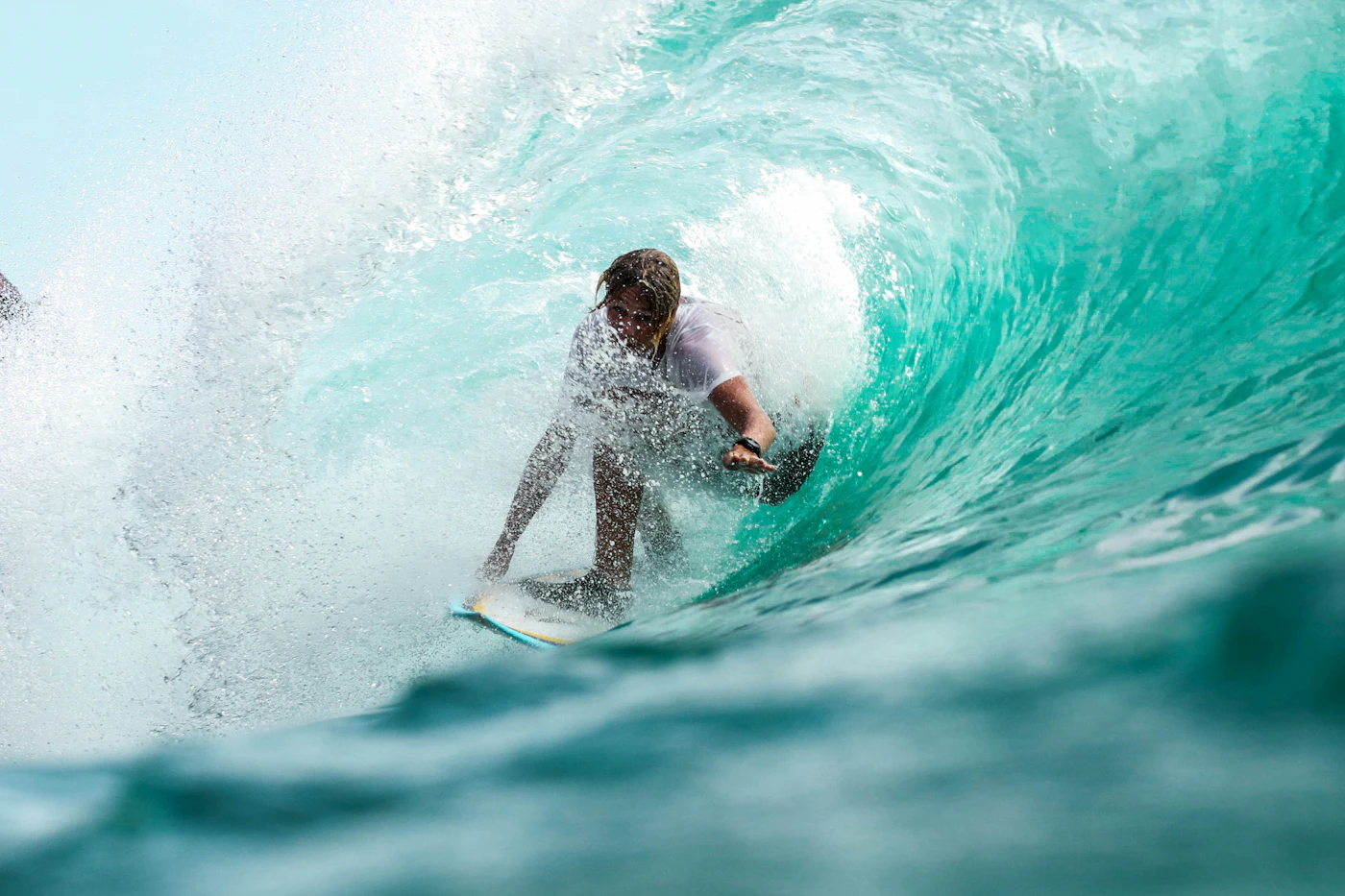
A good surf trip has a way of reshaping how you think about travel. You wake up at first light, check the swell chart on your phone, walk down to a beach that a few hours ago looked identical to a hundred others, and paddle into a wave that feels like it was built for the exact moment you dropped in. When it works, nothing else compares. When it does not, you learn quickly that the ocean does not run on your schedule, and half the skill of a surf trip is learning to plan around that reality.
The tricky part is picking where to go. Every surf magazine has its own "10 best waves" ranking and they mostly overlap, but the difference between a legendary spot and a wasted week comes down to timing, tide, skill level, and a handful of practical details that never make the highlight reels. This guide is the version we wish we had when we started planning trips - the destinations that consistently deliver, the ones to leave until later, and the honest costs, seasons, and logistics you need to book the right trip the first time.
How to Pick the Right Destination
Match the Break to Your Level
The most common surf-trip mistake is going somewhere technically over your head and spending the week paddling into whitewater. Reef breaks like Uluwatu, Cloudbreak, Pipeline, or Teahupoo look incredible on film but demand experience with heavy water, shallow bottoms, and localism you cannot bluff your way through. Sand-bottom beach breaks and mellow points - Costa Rica's Nosara, Portugal's Baleal, Morocco's Taghazout, Bali's Canggu - reward improvement fast and keep the injury risk low.
A useful benchmark: if you can paddle out at your home break in overhead surf and catch waves without help, you are ready for intermediate surf destinations abroad. If not, book somewhere with reliable head-high beach breaks and take lessons for a few days before you point yourself at anything sharper.
Pick a Season That Actually Delivers
The biggest gap between hype and reality in surf travel is season. A break that produces perfect head-high walls in October can be flat for six weeks in April, or double-overhead and closing out for two months in December. Every destination in this guide has a recommended window that reflects the average conditions rather than the once-a-decade swell that made it famous.
Pro Tip: Read a Swell Chart Before You Book
Before you commit to a two-week trip, look at three or four years of the same month on a forecast site like Surfline or MSW. Not the size only - look at swell period (13+ seconds is quality groundswell, 8 or under is windswell), swell direction, wind direction and speed, and tide range. A destination that shows 3-4ft at 14 seconds with light offshore wind is going to be spectacular. The same size at 8 seconds with 20 knots of onshore is going to be a mess. Learning to read a chart is the single highest-leverage skill in surf travel.
The Best Surfing Destinations in the World
1. Bali, Indonesia - The Complete Surf Destination
Bali is arguably the best all-round surf destination on the planet. Within a 40-minute drive you can find gentle beach breaks for beginners at Kuta and Batu Bolong, punchy intermediate reefs at Padang Padang and Balangan, and world-class heavy waves at Uluwatu, Bingin, and Impossibles. The water is 27-29 degrees Celsius year-round, boards and lessons are cheap, food is world-class, and the surf culture is welcoming to visitors.
Warungs (small local restaurants) serve full meals for $3-5, mid-range villas with pools run $50-90 per night, and a scooter rental is $6 per day. Best time: May through September for the dry season and offshore winds on the Bukit peninsula. October through April for the east coast (Nusa Dua, Keramas, Sanur). For broader trip planning see our Bali travel guide.
2. Portugal - Europe's Wave Powerhouse
Portugal has quietly become the most complete surf destination in Europe. The exposed Atlantic coastline pulls in swells from every direction, meaning something is almost always breaking somewhere. Ericeira has a dozen quality points and beach breaks within a five-mile stretch. Peniche is home to the world tour's Supertubos beach break. Nazare's giant waves are the most extreme in the world. Down south, the Algarve gets user-friendly beach breaks and is warm enough to wear a springsuit in shoulder seasons.
Coastal towns are affordable, food is excellent, and flights from anywhere in Europe are cheap. Best time: September through November for consistent groundswell and light crowds. Winter is heavier and colder but delivers the biggest waves. See our Portugal travel guide for context on non-surfing plans.
3. Costa Rica - The Warm-Water Beginner-Friendly Standard
If your goal is to learn to surf or level up from beginner to intermediate, Costa Rica is hard to beat. The Nicoya Peninsula (Nosara, Playa Guiones, Santa Teresa) and the southern zone (Pavones, Dominical) have consistent beach and point breaks that work for years of progression. The water is warm, the coastline is undeveloped, the surf culture is relaxed, and the wildlife is genuinely spectacular - it is common to share the lineup with sea turtles and pelicans.
Surf schools are everywhere and the standards are high. Best time: April through October for the Pacific side, when consistent swell wraps into the points and beaches. December through March is drier but flatter. For more on planning Costa Rica broadly, see our Costa Rica travel guide.
4. Hawaii, USA - The Spiritual Home of Surfing
Every serious surfer eventually has to make the trip. Oahu's North Shore concentrates more legendary waves in seven miles than any other place on Earth - Pipeline, Sunset, Waimea, Rockpiles, Log Cabins, Off the Wall - all breaking at their heaviest between November and February. This is not a place to learn. Localism is real, waves are heavy, and the coral bottoms punish mistakes.
For intermediate surfers, the south shores of Oahu, Maui, and Kauai deliver fun user-friendly waves in the summer, with less crowded lineups and warm water. Our Hawaii travel guide covers the islands beyond the surf. Best time: November through February for the North Shores (advanced only), May through September for south shores.
5. Morocco - Long Right Points on a Budget
Morocco quietly holds one of the best concentrations of long-period Atlantic points in the world. Taghazout village on the central Atlantic coast is the base for classic right-handers like Anchor Point, Boilers, Killer Point, and Panoramas. When it is on, these waves can peel for 200-300 meters and hold size and shape in a way most beach breaks cannot.
Guesthouses run $25-60 per night with breakfast, and a full-day surf-and-yoga package runs $50-90. Best time: October through March for the consistent north Atlantic swells. Combine it with a trip inland to the mountains or medinas via our Morocco travel guide.
6. The Mentawai Islands, Indonesia - The Boat-Trip Bucket List
Off the western coast of Sumatra, the Mentawai chain packs more high-quality reef breaks per square kilometer than anywhere else in the world. Macaronis, Lance's Right, Kandui, Bank Vaults, Rifles - these are the perfect waves you see in surf films, breaking over shallow reef in 28-degree water. You reach them by liveaboard boat or by staying at one of the surf camps on the outer islands.
A 10-11 night boat trip runs $2,800-4,500 per person including meals, guides, and transfers - it is expensive but includes everything except beers and international flights. Land-based camps are cheaper ($1,600-2,400) but you are locked to whatever is breaking in front of the camp. Best time: April through October for peak season, with June through September the sweet spot for size and consistency. Intermediate and advanced only.
7. Fiji - Cloudbreak, Restaurants and Warm Water
Fiji's Mamanuca Islands hold two of the most famous reef waves on the tour - Cloudbreak and Restaurants. Cloudbreak is a heaving left reef pass that runs 300+ meters when it is on, and Restaurants is a punchy left in front of Tavarua Island resort. The setup is expensive but streamlined: you fly to Nadi, boat out to a surf resort, and everything from meals to boat transfers is included.
Beyond the marquee waves, Fiji has warm 27-28 degree water, near-perfect trade winds for most of the season, and surf-focused resorts that cater specifically to travelling surfers. See our Fiji and South Pacific guide for more. Best time: April through October, with June through August the most consistent.
8. Australia - Consistency and Scale
Australia has more high-quality surf coast than almost any other country - the Gold Coast points (Snapper, Kirra, Burleigh), Byron Bay, Bells Beach in Victoria, Margaret River in Western Australia, and Ningaloo on the northwest. It is a country where you can plan a road trip up or down thousands of kilometers of coastline and find rideable waves every day.
Costs are higher than in Asia but food, coffee, and accommodation are excellent. Rip Curl and Billabong were both founded here for a reason. Best time: March through October for the east coast, April through September for the west. For broader planning see our Australia travel guide.
9. The Maldives - Warm Water Reef Passes
The Maldives quietly has some of the best warm-water reef breaks in the world - Chickens, Cokes, Sultans, Pasta Point, Lohi's - all breaking over sandy channel entrances rather than sharp coral. The atolls are usually surfed by boat (liveaboard) or from a small handful of surf resorts. Crowds are usually small because permits are tightly controlled.
Boats run $2,200-4,000 for 7-10 nights all-in and you can combine surf with luxury or budget beach time on the same trip. See our Maldives travel guide for atoll logistics. Best time: March through October, with the strongest swell in June and July.
10. South Africa - Cold Water, Perfect Waves
Jeffreys Bay on the Eastern Cape is one of the longest right-hand point breaks in the world - when a big south swell lines up, the ride from Boneyards through Supertubes can last a full minute. Cape Town has a huge concentration of variety - beach breaks at Muizenberg, big-wave setups like Dungeons, and reefs at Kommetjie. The water is cold (14-19 degrees Celsius) and requires a full 4/3 wetsuit, but the wave quality more than compensates.
Add in reasonable prices, great food and wine, and easy road trips inland to safari country and you have a surf trip that doubles as an adventure. Best time: April through September for the winter swell season. See our South Africa travel guide.
11. Nicaragua - Consistent Offshores and Empty Lineups
Nicaragua's Pacific coast holds a rare geographic quirk: for 300 days a year, easterly trade winds blow offshore across the Pacific breaks, grooming waves that would otherwise be blown out. Popoyo, Playa Colorado, Playgrounds, and Manzanillo deliver punchy beach breaks and reef setups with far fewer people than you would find in Costa Rica or Panama.
It is more rough-and-ready than Costa Rica but the wave-to-crowd ratio is significantly better and prices are lower. Best time: March through November, with April through September the swell-heavy season.
12. The Basque Country - France and Spain
The stretch of Atlantic coast from Biarritz through Hossegor down to Zarautz and Mundaka is the beating heart of European surf. Hossegor's beach breaks are among the most powerful in the world when a Biscay low lines up in autumn. Mundaka in Spain is one of the great river-mouth left points anywhere. The scene is sophisticated, the food is world-class, and the surf schools are excellent for beginners in summer.
Best time: September through November for the classic French autumn swell season. Summer is fun but small; winter can be enormous but cold.
Suggested Itineraries by Style
First Real Surf Trip: 10 Days in Costa Rica or Portugal
Fly into Liberia (Costa Rica) or Lisbon (Portugal). Base yourself in Nosara or Ericeira. Take three days of lessons, then surf twice a day for the rest of the week, mixing spots as the swell rotates. Budget $1,600-2,400 per person including flights.
Intermediate Progression Trip: 14 Days in Bali
- Days 1-6: Canggu and Berawa - fun beach breaks, easy lineup, good for building up paddle fitness
- Days 7-11: The Bukit Peninsula - Padang, Bingin, Impossibles for reef break experience
- Days 12-14: East coast on the right days - Keramas or Nusa Dua for something different
Budget $1,800-2,600 all-in including international flights.
Bucket-List Trip: 10 Days in the Mentawais or Fiji
One boat, one destination, all in. Book 8-12 months in advance for the peak-season windows. Budget $5,500-8,500 per person including flights and gear.
The Combined Trip: Surf Plus Travel
Almost every destination above is a great country to travel in beyond the waves. Portugal gives you Lisbon and the Alentejo. Morocco gives you Marrakech and the Sahara. Fiji gives you the Yasawa Islands and inland trekking. Combining a surf trip with 4-5 days of non-surf travel is often the most memorable version of the trip - and it takes the pressure off if the waves do not cooperate.
What It Actually Costs
Costs vary wildly by destination and style, but here are honest per-day estimates per person, excluding international flights:
- Budget land-based (Bali, Morocco, Nicaragua): $60-120/day all-in
- Mid-range land-based (Portugal, Costa Rica, Mexico): $130-220/day
- Premium land-based (Hawaii, France, Australia): $260-450/day
- Standard boat trip (Maldives, Fiji resorts): $350-600/day
- Premium boat trip (Mentawais liveaboard): $600-900/day
The largest single lever is timing your flight. Shoulder seasons cut prices dramatically on both flights and accommodation, and shoulder seasons are often when the surf is genuinely best. Tools and strategies in our cheap flights guide apply directly - getting to Bali for $650 instead of $1,300 changes the math on the whole trip.
Tell us where and when you want to surf - we'll find the best flight and accommodation combinations for your dream surf trip.
Plan My Surf TripBoards, Gear, and Practical Advice
Board Rental vs Traveling With Your Own
For a shorter trip - say, under two weeks - most surfers save money and hassle by renting boards at the destination. Bali, Portugal, and Costa Rica all have plentiful rental fleets and boards can be swapped daily for different conditions. Airlines increasingly charge $100-200 per board each way, and lost or damaged bags happen more often than most surfers admit.
For a specialty trip (Mentawais, big waves at Nazare, Hawaii's North Shore), bring your own quiver - you need boards you know intimately.
Wax, Fins, and Leashes
Wax is cheap everywhere but the tropics run out of cold-water wax and vice versa - bring the right hardness for your destination. Pack a spare leash, an extra set of fins, and a compact ding-repair kit. Rip a fin box on day one of a two-week trip and you will lose two days finding a shop that can fix it.
Wetsuits and Sun Protection
Cold-water destinations (South Africa, Portugal winter, France winter) require a 4/3 wetsuit with boots and often a hood. Tropical spots do not need a wetsuit at all, but many surfers wear a rash guard or lycra long-sleeve to protect against sunburn on 4-6 hour water sessions. Reef-safe sunscreen (zinc-based) is essential in the Pacific and Indian Ocean - and many countries now legally require it.
Travel Insurance
Standard travel insurance often excludes surfing above head-high, and none cover board damage or theft. Specialist providers like Surf Travel Insurance and Global Rescue cover the trip and gear together for around $80-150 per week. If you are heading somewhere with heavy waves, do not skip this step.
Respect Local Etiquette
Nowhere is this more important than at reef breaks. Learn the pecking order, wait your turn, do not drop in, do not paddle around locals to get closer to the peak, and if you are not sure who has priority, defer. The best travellers surf less in the first hour and more in the last three - by then you have earned some tolerance from the lineup.
Take Lessons Even When You Do Not Need Them
Every top-ranked surfer takes lessons or coaching sessions regularly. A local guide who knows the tide, the currents, and the peak positions at a new spot will get you into better waves in three sessions than a week of guessing. It is the highest-return purchase you can make on a surf trip after the flight itself.
The Bottom Line
Surf travel rewards research and patience more than almost any other kind of travel. Pick a destination that matches your level, go in the right season, base yourself somewhere with variety in case the main break does not fire, and stay long enough for the ocean to give you what you came for. Start with a forgiving destination - Costa Rica, Portugal, or Bali - and build up experience before chasing legendary waves that punish mistakes.
The pattern repeats once you are hooked: one trip, then another, then another. There are more world-class waves on this planet than any single lifetime can fully cover, but a lifetime of trips gets you to a lot of them. Start with the right destination at the right time, and the rest takes care of itself in the lineup.