Argentina is not a country you "do" in a week. It stretches more than 3,400 kilometres from the subtropical jungles of the north to the windswept tip of Tierra del Fuego, the southernmost inhabited region on the planet. In between you get one of the world's great capital cities, a wine region pressed against the Andes, the largest waterfall system on Earth, glaciers you can walk on, and a beef-and-wine culture that turns dinner into a nightly event. The reward for showing up is enormous; the trap is trying to see all of it at once.
This guide is built around how Argentina actually works for travellers - the regions that are worth the flight, the ones you can skip on a first trip, when to go to each, what things cost in a country whose currency has a habit of misbehaving, and how to stitch it all into an itinerary that doesn't have you spending half your holiday in airports. Whether you have ten days or a month, the goal is the same: fewer places, more time, and a real sense of why Argentines are in no rush to be anywhere.
When to Go
Remember the Seasons Are Flipped
Argentina is in the Southern Hemisphere, so its summer runs December to February and its winter June to August. That single fact shapes the entire trip. December and January are peak season for Patagonia (long days, open trails) but brutally hot and humid in Buenos Aires and the north, where locals flee the city. July is deep winter - perfect for skiing in Bariloche but bitter and largely closed in the far south.
The Sweet Spots: Spring and Autumn
For most travellers, the best windows are October to early December (spring) and March to April (autumn). Buenos Aires is mild and beautiful, the wine country around Mendoza is green or glowing with harvest colour, Iguazu is warm but not stifling, and Patagonia is open with thinner crowds and lower prices than the January peak. Autumn in particular is magic: the vineyards turn gold and red, and the city's parks fill with jacaranda and plane-tree colour.
Region by Region
Because the country is so long, "the best time to visit Argentina" depends entirely on where you're headed:
- Buenos Aires: Year-round, but spring and autumn are ideal. Summer is hot and many porteños leave town.
- Patagonia (El Calafate, El Chalten, Bariloche): November to March only for hiking. Outside that window, weather closes trails and many services shut.
- Iguazu Falls: Good year-round; avoid the peak summer heat and the busiest holiday weeks if you can. Flow is strong most months.
- Mendoza wine country: Harvest season (late February to April) is the most atmospheric, with festivals and full wineries.
- The Northwest (Salta, Jujuy): Best in the dry season, roughly April to November, when desert roads are reliable.
Pro Tip: The "Blue Dollar" and How to Pay
Argentina has long had a gap between the official exchange rate and the street ("blue") rate, which can make a huge difference to your budget. The simplest modern fix is to pay with foreign Visa/Mastercard, which now often applies a favourable tourist rate, and to bring clean, new US dollar bills you can exchange at the better rate when cards aren't accepted. Avoid airport exchange counters, carry cash for small towns and Patagonia, and check the current rate before you go - it moves fast.
Getting Around a Very Long Country
Fly the Long Legs
Distances in Argentina are deceptive on a map. Buenos Aires to El Calafate is roughly the same as London to Cairo. Trying to bus everything will eat your entire trip. For the big jumps - Buenos Aires to Patagonia, to Iguazu, or to Salta - fly. Aerolineas Argentinas and low-cost carriers like Flybondi and JetSMART connect the main hubs, and booking two to four weeks ahead keeps fares reasonable. Note that most domestic flights route through Buenos Aires's Aeroparque (AEP), close to the city, while international flights use Ezeiza (EZE), about 45 minutes out.
Buses for the Middle Distances
Argentina's long-distance buses are genuinely excellent - the premium "cama" and "cama suite" seats recline almost flat, with meals and service that put many airlines to shame. They make sense for routes like Mendoza to the wine valleys, Salta around the northwest loop, or Bariloche to nearby lakes. For overnight hops they save you a hotel night, too.
Renting a Car
A car is worth it in two places above all: the Mendoza wine region (though plan a designated driver) and the Northwest, where the painted-desert landscapes around Salta and Jujuy beg to be driven slowly. In Patagonia, a rental opens up the Ruta 40 and lake-district routes, but check whether you're allowed to cross into Chile if your plans include it.
Buenos Aires: Start Here
Argentina's capital is one of the most seductive cities in the world - European bones, Latin soul, and a nightlife that genuinely doesn't get going until midnight. Give it at least three full days at the start of your trip; it's also where most domestic flights connect, so it's an efficient base.
The Neighbourhoods That Matter
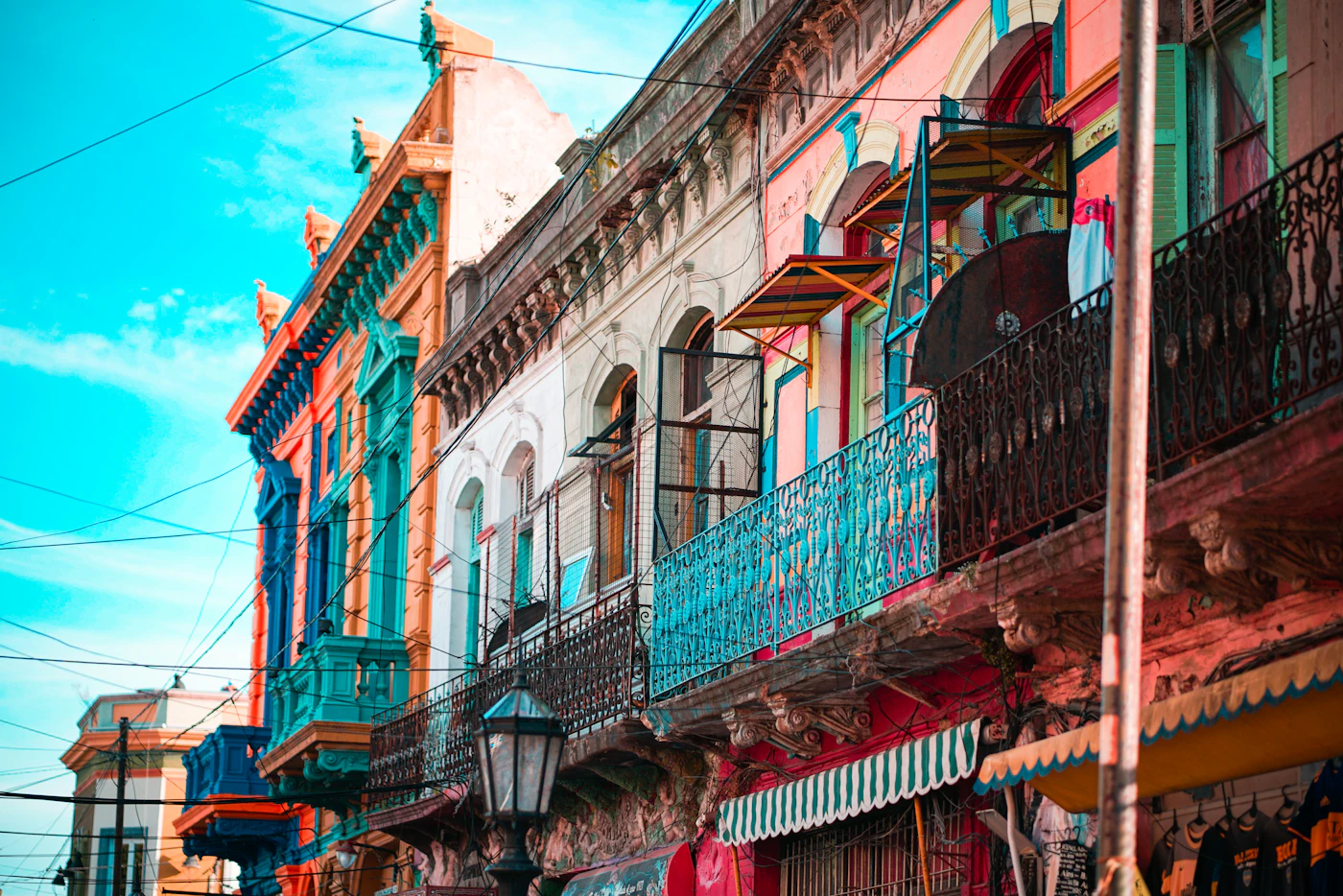
San Telmo is the old city - cobblestones, antique markets (the Sunday Feria de San Telmo is unmissable), and the birthplace of tango. Recoleta is grand and aristocratic, home to the extraordinary cemetery where Eva Peron is buried, a maze of marble mausoleums that's far more beautiful than it sounds. Palermo - split into Palermo Soho and Palermo Hollywood - is where you'll likely sleep and eat: leafy, full of boutiques, cafes, and the city's best restaurants. La Boca, with its painted tin houses along the Caminito, is the postcard - worth a daytime visit, but stick to the tourist streets and don't wander far.
What to Actually Do
See a tango show, but choose a smaller, music-first venue over the big dinner-spectacles. Eat a long, late dinner and follow it with ice cream - Argentine helado rivals Italy's gelato. Catch a football match if you can stomach the intensity; Boca Juniors at La Bombonera is one of sport's great experiences. And simply walk: along the rose gardens of the Bosques de Palermo, through the modernised docklands of Puerto Madero, and across the wide Avenida 9 de Julio, supposedly the world's widest avenue.
Patagonia and the Lake District
Patagonia is the reason many people come to Argentina, and it lives up to the legend. The classic southern circuit centres on El Calafate, gateway to the Perito Moreno Glacier - a five-kilometre wall of ice that calves into the lake with a sound like cannon fire - and El Chalten, a tiny trekking village beneath the jagged spires of Mount Fitz Roy, with world-class day hikes leaving right from the main street.
Further north, the Lake District around Bariloche offers a softer, alpine version of Patagonia: chocolate shops, Swiss-style architecture, deep blue lakes, and superb hiking and skiing depending on the season. If you only have a few days in the south, pick one zone rather than trying to do both - the distances are vast. We've written a dedicated Patagonia travel guide with detailed routes and trek planning if this is your main reason for the trip.
Iguazu Falls
On the border with Brazil, Iguazu is not a single waterfall but a system of around 275 cascades spread across nearly three kilometres of jungle - taller than Niagara, wider than Victoria, and surrounded by subtropical rainforest full of toucans, coatis, and butterflies. The Argentine side gives you the immersive, up-close experience: a network of walkways takes you right above and beside the water, culminating in the Garganta del Diablo (Devil's Throat), a horseshoe of water so violent it generates its own permanent cloud of spray.
Most travellers fly in, spend a full day on the Argentine side, and consider a half-day across the border in Brazil for the panoramic view. Two nights is plenty. Wear shoes you don't mind soaking and bring a dry bag for your phone - you will get wet.
Mendoza and Wine Country
At the foot of the Andes, Mendoza is the heart of Argentine wine and the global capital of Malbec. The region is high-altitude desert irrigated by snowmelt, and the vineyards run right up against snow-capped peaks - a backdrop that turns even a simple tasting into something cinematic. The main sub-regions are Maipu (close to the city, good for cycling between bodegas) and the Uco Valley (higher, more dramatic, home to the most celebrated wineries).
Plan at least two days: one touring wineries with lunch at a vineyard restaurant - long, multi-course, paired-wine affairs that are an experience in themselves - and one for the mountains, whether that's a drive toward Aconcagua, the highest peak in the Americas, or rafting and horseback riding in the foothills. Book winery visits in advance; the best ones don't take walk-ins.
The Northwest: Salta and Jujuy
Argentina's least-visited great region is its northwest, and it's spectacularly different from the rest of the country - more Andean than European, with indigenous culture, adobe villages, and landscapes that look painted. Base yourself in Salta, a handsome colonial city, and drive out to the Quebrada de Humahuaca, a UNESCO-listed gorge lined with multicoloured rock formations, and the Hill of Seven Colours at Purmamarca. Further out lie vast salt flats and some of the world's highest vineyards around Cafayate, where the local Torrontes white wine is grown. This region rewards travellers who have a second week and want to get well off the standard circuit.
Food and Wine
Eating in Argentina is a national pastime, and a few things are essential. The asado (barbecue) is the centre of social life - if you're invited to one, drop everything and go. In restaurants, order a parrilla mixed grill or a single great steak (ask for jugoso for medium-rare). Beyond beef, try empanadas (regional fillings vary - Salta's are famous), milanesa (breaded cutlet), and dulce de leche in everything from breakfast pastries to alfajores, the country's beloved filled cookies.
Drink Malbec, obviously, but also explore Torrontes whites and the growing craft-beer scene in Buenos Aires and Bariloche. And learn the rhythm of mate - the bitter herbal tea shared from a gourd that you'll see everyone, everywhere, sipping through a metal straw. Being offered mate is a gesture of welcome; accept it.
What It Costs
Argentina swings between bargain and surprisingly pricey depending on the exchange rate and the region. As a rough 2026 guide, paying smartly with foreign cards or blue-rate cash: a good steak dinner with wine runs $15-30 per person, a mid-range hotel $60-120 a night, and intercity flights $60-150 when booked ahead. Patagonia is the most expensive region by far - remote logistics push up food, fuel, and lodging - while Buenos Aires and the north can be excellent value. Budget travellers can get by on $50-70 a day; comfortable mid-range trips land around $120-180 a day excluding the long flights.
Sample Itineraries
10 days: Buenos Aires (3) → Iguazu (2) → El Calafate / Patagonia (3) → back to Buenos Aires (2). Hits the icons without overreaching.
2-3 weeks: Add Mendoza wine country (3) and the Salta northwest loop (4), or split Patagonia between El Calafate and El Chalten for serious hiking. Always leave a buffer day before international departures.
Practical Tips
Time Your Days the Argentine Way
Life runs late here. Lunch is 1-3pm, dinner rarely starts before 9pm and often closer to 10, and nightlife begins after midnight. Fighting this just leaves you eating alone in empty restaurants. Take the long afternoon, have a coffee and a medialuna pastry around 5pm, and lean into the late dinner.
Language and Connectivity
Spanish is essential outside tourist hubs, and Argentine Spanish has its own music - "ll" and "y" sound like "sh," and locals use vos instead of tu. A few phrases go a long way. Buy a local eSIM or SIM on arrival for cheap data; Wi-Fi is widespread in cities but patchy in Patagonia and the north.
Don't Underestimate the Distances
It's the single most common first-timer mistake. Argentina is the eighth-largest country in the world. Pick two or three regions, give each real time, and fly between them. You'll have a far better trip seeing Buenos Aires, Patagonia, and Iguazu properly than racing through six places and remembering only the airports.
The Bottom Line
Argentina rewards travellers who slow down. The distances are real, the seasons are flipped, and the currency keeps you on your toes - but in exchange you get a country that feels like several at once: the European elegance of Buenos Aires, the raw wilderness of Patagonia, the jungle thunder of Iguazu, and the sun-soaked vineyards of Mendoza, all bound together by extraordinary food, generous people, and a culture that genuinely knows how to enjoy itself.
Plan around the regions rather than the map, book the long flights early, carry cash for the small places, and build in time to do nothing but sit at a long dinner with a bottle of Malbec. Do that, and Argentina won't just be a trip - it'll be the one you keep talking about long after you've gone home.